

Considering sleepaway camp for the first time? It’s natural to have questions. You want to know exactly what happens when your child is away from home for weeks at a time. How do they spend their days? Who takes care of them? What if they get homesick? What if they need something?
At Camp Lakota, we’ve been answering these questions for families for over 100 years. We know that the more you understand about camp life, the more confident you feel about your child’s experience. This guide walks you through a typical day, introduces you to the people who care for your child, and explains how we handle the things parents worry about most.

Camp is different from school, but it’s not chaotic. Every day follows a rhythm that helps campers know what comes next. This predictability is especially important for new campers, who need to feel like they understand their environment. Over the course of just a few days, your child will know this rhythm by heart.
The day begins with Reveille, a traditional camp wake-up that features music and energy to get everyone out of bed. It’s not jarring or military-style. Our directors Danielle or Hannah play a song (sometimes a camp tradition, sometimes something new), and counselors help get kids up, washed, and ready for the day.
Younger campers (Braves division, ages 6-9) head to breakfast first shift. Older campers have a bit more time to get ready and clean their bunks before second shift breakfast. This staggered approach keeps breakfast manageable and gives older kids a little independence in their morning routine.
Between breakfast shifts, our Head of Camp walks bunks to check cleanliness and make sure campers are ready for the day. This isn’t a military inspection. It’s a standard that teaches responsibility and gives counselors a clear expectation.
Before activities begin, the entire camp gathers on the front lawn around the volleyball court. This is the camp’s town meeting. We make announcements about the day. We celebrate campers who have birthdays. We recognize acts of kindness or good sportsmanship. We highlight any special activities or inter-camp competitions. Some days, we raise the flag and say the pledge. This 15-minute gathering sets a positive tone and builds community.
Three back-to-back activity periods make up the heart of the morning. We’ve moved away from “daily electives” in these slots. Instead, all periods are scheduled activities. At the beginning of each week, every division gets a schedule. They know they’ll be doing rock climbing, archery, watersports, arts, drama, swimming, riding, or whatever activities their division is assigned to that day.
Each division attends their scheduled activities together. This keeps groups manageable, ensures every camper participates, and allows our activity specialists to plan meaningful, age-appropriate programming.
Third Period Special: While most divisions have a scheduled activity, third period includes a rotation for general swim. Either the boys’ camp or girls’ campus goes to the pool while the other goes to the lake. We alternate daily. This ensures every camper has dedicated water time with certified lifeguards overseeing everything.
Lunch is a big deal at camp. Younger campers eat first shift so they get a full, uninterrupted rest hour afterward. Older campers eat second shift and have a shorter rest period before and after. (We learned a long time ago that older kids need less dead time.)
Rest hour is mandatory. All campers stay in their bunks. This isn’t punishment. It’s essential downtime in a busy day. Kids read, write letters, sleep, or just have quiet time. Counselors use this time to help campers with letters home, medication, or anything they need. For new campers especially, rest hour can feel like a safe break in the day.
After rest hour, camp gathers on the front lawn again. Counselors hold signs for the week’s elective activities. Kids line up with their chosen activity and walk together to that program. This is the one time per week kids choose their activity (from a range of options like watersports, yoga, specialized instruction, horseback riding, etc.). Everything else is scheduled by division.
Campers return from electives and gather by division for snacks. We provide crackers, ice pops, fruit, and other refreshments. It’s a brief recharge before the afternoon push.
More scheduled activities, similar to the morning. Each division has their assignments. Sixth period often includes another general swim rotation for the opposite gender than the morning rotation.
Lower camp (younger kids) eat first shift. Upper camp eats second shift and has more time afterward to shower and get ready for evening activities. Camp dining is communal. Counselors eat with their groups.
Depending on the night’s plans, there’s sometimes free play time. Kids can shoot hoops, play games on the lawn, or hang out before heading to their bunks to prepare for the evening program.
Every night, the whole camp does something together. This might be a campfire, a talent show, games, a movie, a dance, a scavenger hunt, or a camper-run activity. Evening activities are where camp magic happens. Campers remember these moments forever.
Taps is our wind-down. All counselors are called to their “OD” (on-duty) posts. This signals to off-duty counselors that they’re free to leave for the night. For campers, “taps” allows certain groups to have “curfew time”—the window when they’re allowed out of their bunks to visit the canteen for snacks, hang out on the front lawn, shoot hoops, or chat with friends.
After their assigned curfew time, campers return to bunks. Counselors help with bedtime routines, story time, or just quiet conversation. Lights out happens, and the camp settles down for the night.
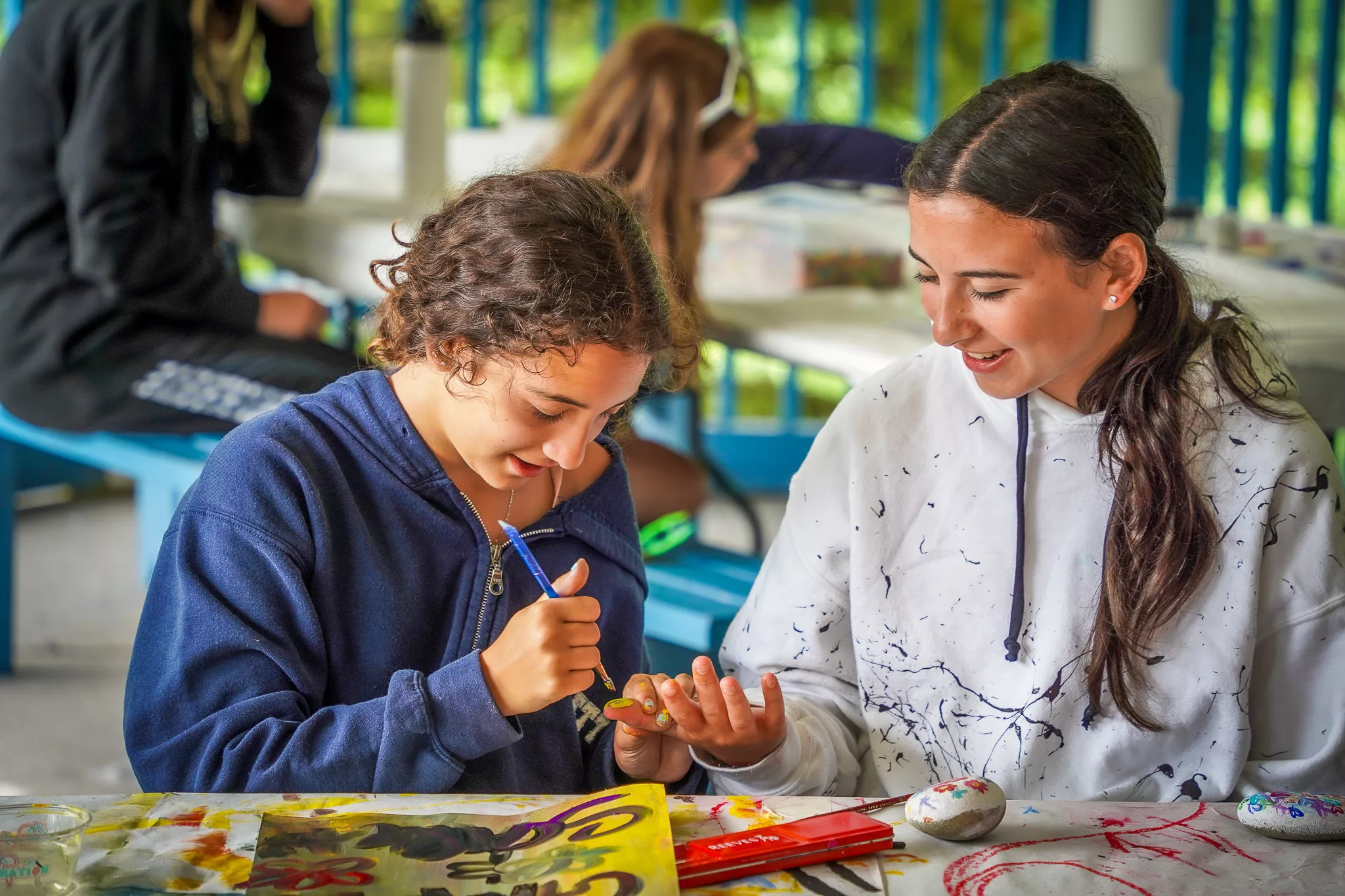

Counselors aren’t just watching your child. They’re doing activities alongside your campers. When we do archery, counselors shoot arrows. When we swim, they swim. When we play games, they’re in the game. This matters enormously for new campers, who are more willing to try new things when an adult they trust is doing it too.
All of our staff undergo intensive training before summer even begins. Every counselor completes background checks and mandatory sexual abuse prevention training. Then, during orientation week, they review our full handbook, learn camp roles and expectations, practice handling real-world situations (like homesickness), understand our reporting structure, and learn safety protocols for every activity. Even counselors who aren’t activity specialists learn lake safety, ropes course safety, and how to respond to medical situations.
For our two youngest divisions (Braves boys and Braves girls), we have “Camp Moms”—group leaders who are actual parents themselves. Many are alumni parents or have prior camp experience.
Camp Moms live on campus. They supervise counselors. They attend activities with their groups. They handle sensitive issues like medication, bedtime routines, and emotional needs. They’re available for phone calls before camp starts. And they communicate with parents on a parent-to-parent level, which makes anxious families feel less alone.
If your child is joining Camp Lakota for the first time, this is a huge advantage. Your child has a counselor AND a parent-like figure who genuinely understands what it’s like to send your kid to camp for the first time.
When your child is away from home, you need to trust that everything possible is being done to keep them safe and healthy. Here’s what that looks like at Camp Lakota.
We have a registered nurse on staff for the entire summer. We also have doctors on call. We’re located just 10 minutes from urgent care and 20 minutes from a hospital. Any medical issue beyond a simple band-aid results in a phone call home. You’ll always know what’s happening with your child’s health.
Water activities are some of the most important at camp—and some of the most heavily supervised. We employ certified lifeguards specifically for the pool and specifically for the lake. The lake and pool each have a head supervisor (a husband-and-wife team with years of camp experience) who oversee all water activities and ensure protocols are followed perfectly. This multi-level supervision is industry-leading.
We have a gated entrance with security presence. We monitor all common areas with cameras. Large animals are detected automatically through our system, and we’re notified immediately if anything requires attention. We conduct fire drills, active shooter drills, large animal drills, and snake awareness seminars every summer.
Beyond background checks and training, our insurance company sends a representative to speak with staff every orientation. We maintain strong relationships with local first responders. Our maintenance team head is actually a certified first responder. We don’t just talk about safety. It’s built into every layer of our operation.
Your child might get homesick. That’s normal, and it doesn’t mean camp isn’t working.
Homesickness typically peaks around day 3-4 and again around week 2-3. It’s a sign that your child is thinking about home, not that they’re unhappy at camp. Most campers push through, connect with friends, find their confidence, and end up having transformative experiences.
Our counselors are trained in homesickness response. They validate feelings. They stay positive. They redirect attention. They keep kids engaged in activities where they’ll feel successful and connected. And they’re always in touch with our team about how each camper is adjusting.
You can send letters and care packages. We don’t discourage communication, but we also don’t encourage excessive phone calls in the first two weeks, as they often extend homesickness. By week 3, most campers are completely acclimated and happy.
Your camper doesn’t need a huge wardrobe. We do laundry weekly, so campers can reuse clothes. Generally, one week to a week and a half of clothes is sufficient, even for six-week campers. We send out a detailed packing list and a themes/events list so you know if your child needs a Halloween costume or other special items.
For full packing guidance, see our detailed packing page.
Before camp starts, first-time campers can attend Rookie Day. This is a low-key, informal visit where new campers meet counselors, see their bunks, explore camp, and ask questions. It significantly eases the transition. Many families say Rookie Day was the turning point.
You’ll receive regular updates from your camper during their stay. We also send weekly updates from your camper’s group. If anything significant happens, we call. You’re never in the dark.
If your child is in Braves (ages 6-9), you have a Camp Mom in your corner. She’s been through this before. She’ll check in with you before camp starts. She’ll answer questions. She understands the first-time camper experience in a way that only another parent can.
Camp Lakota is built on 100+ years of experience supporting campers—including lots of first-timers. We know what helps kids thrive. We know what parents need to feel confident. And we’re genuinely invested in making sure your child has a summer they’ll remember for life.
If you have questions about what to expect, we’re here to answer them. We’re happy to connect you with a Camp Mom, go over a typical day in more detail, or talk through specific concerns. Your peace of mind is part of our job.