

At Camp Lakota, the bunk is more than a place to sleep. It’s where friendships are forged at the end of a long day, where inside jokes are born, and where campers build the kind of community that follows them home long after the summer ends. For over 100 years, we’ve worked hard to make sure every bunk at Lakota feels safe, comfortable, and genuinely welcoming from the very first night.
Camp Lakota’s bunks are classic wooden cabins, the kind that have housed generations of campers and carry that unmistakable feeling of wood, summer air, and shared adventure. They are not luxury accommodation, and that is entirely the point.
Each bunk has electricity and hot water, and twin beds sized for standard bedding. Campers are encouraged to bring a trunk or duffel for their belongings, and to pack with the summer in mind rather than the wardrobe. Boys bunks house 10-15 campers and girls bunks typically have 8-10, while Chiefs live in their own dorm-style building.
More than anywhere else on campus, the bunk is where the real camp experience lives; it’s where the late-night conversations, the cabin cheers, the inside jokes that only make sense to the campers who were there.

Every bunk at Camp Lakota is staffed by college-age counselors who live alongside campers throughout the entire session. They’re not just supervisors, they’re the people who notice when a camper is having a hard day, who lead the cabin cheer, and who make the bunk feel like the safest place on campus.
Every counselor is thoroughly screened before they arrive at Lakota. Our hiring process includes:
We believe we hire the best, because your child’s safety and personal welfare are our top concern, and that belief shapes every hiring decision we make.
Former Lakota campers. Many of our counselors grew up at Camp Lakota. They know what it means to be nervous on the first night, to make a best friend by the third day, and to cry at the Burning of the Numbers because the summer went too fast. That shared camp experience shapes how they show up for every camper.
An international team. We bring in counselors from across the United States and from countries around the world, giving campers a naturally diverse, globally-minded community to grow up in.
Adult specialists. Alongside bunk counselors, adult instructors and coaches, many of them professionals in education, sports, and the arts, bring real expertise to every activity across campus.
The same familiar faces also come back summer after summer, building a warm, experienced, and deeply caring team that families come to know and trust.


For our youngest division, the Braves, we provide an additional layer of care through our Camp Moms. They’re dedicated to each child’s daily wellbeing, making sure teeth are brushed, hair is shampooed, sunscreen is applied, clothes are clean, and every camper stays properly hydrated. For first-time campers especially, that hands-on attention makes all the difference.
Camp Lakota is directed by Hannah Young, a second-generation camper who spent twelve summers at Lakota before returning as a full-time director, and Danielle Goldspiel, who met her husband Mike at Lakota when they were both ten years old and has been part of the community ever since. Our leadership team doesn’t just run this camp, they grew up here.
Three times a day, the whole camp comes together in the dining hall, and mealtime at Lakota is more than just food. It’s one of the most reliable bonding moments of the day.
The conversations that happen over a plate of food, like the recap of morning activities, the planning for the afternoon, the slow unwinding at the end of a long summer day, are part of what makes bunk life feel like a real community.
Camp Lakota is not a peanut-free camp but is peanut conscious and can accommodate most dietary concerns. If your child has specific dietary needs, we encourage you to reach out before the summer begins so we can discuss the best approach together.


Camp Lakota sits on the shores of Masten Lake in the foothills of New York’s Catskill Mountains, just 90 minutes from New York City, and a world away from everything that competes for kids’ attention during the school year.
With under 400 campers each summer, Camp Lakota is large enough to offer a rich, diverse community and small enough that every camper is known as an individual. Bunks are organised by age group and division, so your child lives alongside peers at a similar stage of life, navigating the same questions about independence, identity, and friendship.
Without phones and devices, the campus itself becomes the social world. The bunk becomes the place where conversations happen that wouldn’t happen anywhere else, late at night, without an audience, with the people who are becoming lifelong friends. The cabin cheers, the cabin traditions, the inside jokes that form in the first week: all of it starts in the bunk, and it stays long after the summer ends.
The physical campus is designed for whole-community experiences that define a Lakota summer, including:
More From Camp Lakota

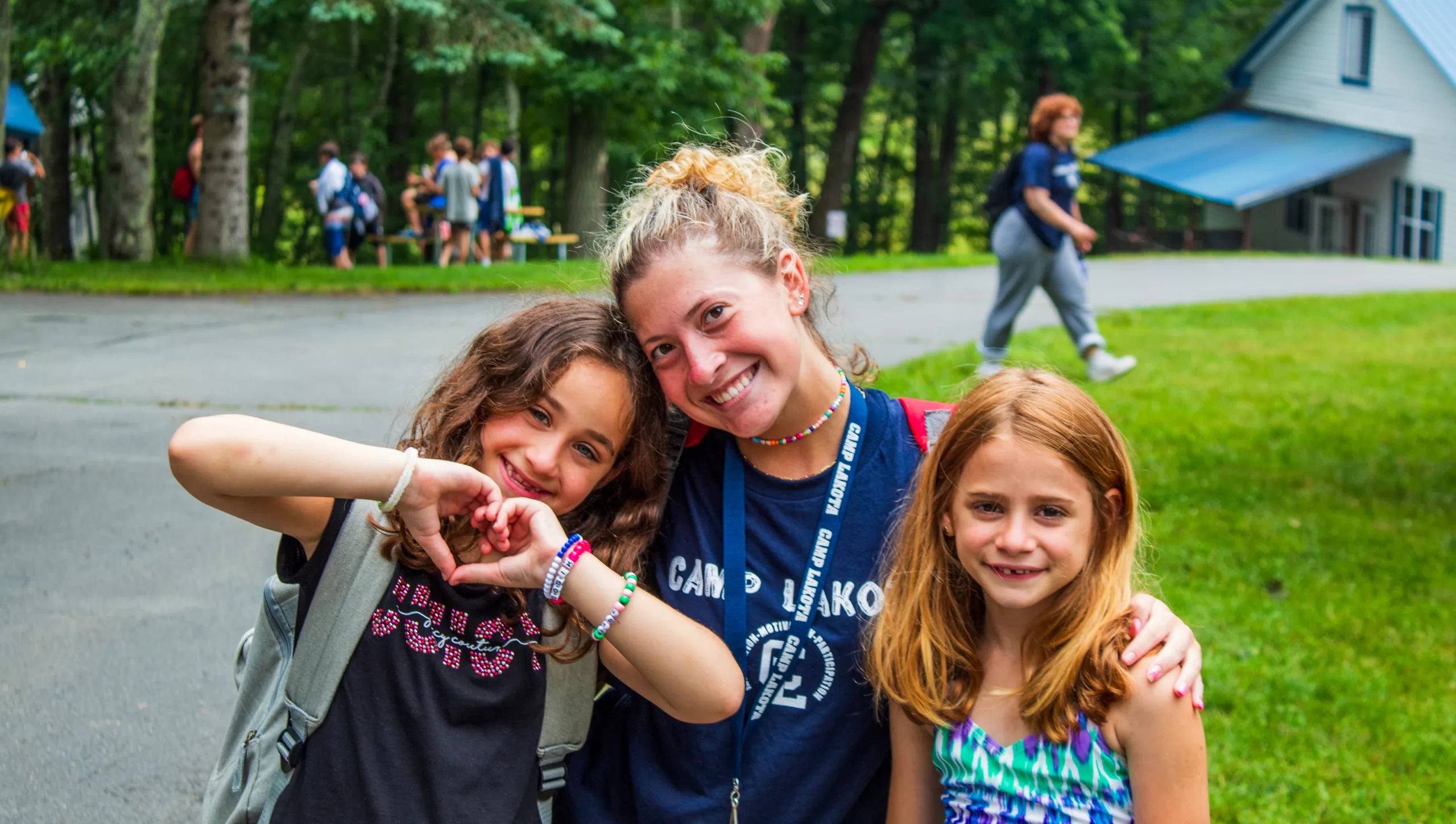
The best way to understand what bunk life at Lakota looks like is to see it. Join us for a tour and walk the campus, meet the staff, and let your child experience what a summer here could feel like. Or, if you’re ready to take the next step, we’d love to hear from you!
Camp Lakota’s bunks are classic wooden cabins, the kind with genuine camp character built up over decades of summers. Each cabin has electricity and hot water. Boys’ bunks house between 10–15 campers and girls’ bunks typically house 8–10. Our oldest division, the Chiefs, stay in their own dorm-style building. The bunks aren’t luxury accommodation intentionally, instead they are the perfect setting for building a safe space for the summer and encourage bonding among campers
Every bunk is staffed by college-age counselors who live in the cabin alongside campers throughout the session. Our youngest campers in the Braves division also benefit from Camp Moms who provide hands-on support with daily routines like hygiene, clean clothes, sunscreen, and hydration. We’ll be happy to share more about specific counselor ratios, just get in touch with our team.
Campers are placed by division, which is determined by age and grade. This means your child lives alongside peers at a similar stage of development, which naturally accelerates friendship and makes the transition to camp life easier. If you have a specific request or concern about placement, we encourage you to reach out before the summer; we’re happy to discuss it.
Our counselors are trained specifically to support bunk dynamics. They’re present in the cabin throughout the day and at night, and they’re skilled at recognising tension early and helping the group work through it. If a concern reaches the point where you’d like to speak with us directly, our team is reachable throughout the summer and we take every parent concern seriously. We believe the bunk experience itself, especially navigating relationships with peers, is part of what makes camp so valuable.
Some homesickness is completely normal, and our counselors are trained to support campers through it. The most effective antidote is connection, whether to their bunkmates, their counselors, or the general rhythm of camp life, and our program is intentionally designed to build that connection fast.
The no-screens campus helps enormously. Without phones as a distraction or escape, campers invest fully in the people around them, so homesickness typically eases within the first few days. We also ask that calls home are held off during the first week, which can feel difficult for parents but makes a genuine difference to how quickly campers settle in.
Through a Bunk 1 account, you can view photos of your child daily, read blog updates from across campus, and send unlimited Bunk Notes, which are messages that are printed and delivered to your camper with the daily mail.
After the first week, campers can set up one phone call home per week. Letters and care packages are always welcome, but there is no food allowed in the bunks and envelopes must be no larger than 9″ x 12″. Puzzles, magazines, photos, and letters from home make great care package additions.
Call our summer camp office at 845-888-5611 any time. If it’s after hours, the greeting will connect you directly to a 24-hour emergency number for one of our directors. We are never truly off-the-clock when camp is in session.
Camp Lakota has its own on-premises laundry service. Your child’s laundry is picked up once a week, washed, dried, and folded, and returned within 24 hours. This ensures there’s no need to pack more than a standard session wardrobe.
Campers eat buffet-style in the dining hall, seated at assigned tables with their bunkmates and counselors. Meals are well-balanced and plentiful, and every lunch and dinner includes a make-your-own salad bar and pasta bar.
Camp Lakota is not a peanut-free camp but is peanut conscious and can accommodate most dietary concerns. If your child has specific dietary needs, please reach out to us before the summer so we can discuss the best approach.
Camp Lakota has a fully equipped health center staffed with registered nurses and an on-site doctor, available day and night throughout the summer. If a camper needs anything more than a band-aid, some AC time, or a Gatorade, parents are notified right away; we believe you should always know what’s happening with your child.
For situations requiring off-campus care, the Garnet Health Medical Center in Middletown, NY is just 20 minutes away and Crystal Run Urgent Care Center in Rock Hill, NY is only 10 minutes away.
Yes, Camp Lakota is proudly accredited by the American Camp Association (ACA). ACA accreditation means we’ve met over 300 nationally recognised standards for health, safety, programming, and staff training, and those standards are independently verified on a regular basis.
We recommend reaching out to us directly before the summer to discuss any bunk requests. While we can’t guarantee all requests, we do our best to set every camper up for the strongest possible start, and we always appreciate having this information ahead of time.
Twin-size bedding fits our mattresses (73″ x 30″). Campers are encouraged to bring a trunk or duffel for their belongings and to pack practically for an active summer outdoors. Please don’t send any food with your camper, as it is not allowed in the bunks. For a full packing list, visit our What to Pack for Camp page.